

Every year, as Super Bowl Sunday captivates millions, a parallel cognitive competition unfolds: one where advertisers deploy sophisticated behavioral economics principles to influence the mental shortcuts and decision-making heuristics operating beneath our conscious awareness.
This isn’t merely about capturing attention; it’s about exploiting systematic deviations from rationality that behavioral economists have spent decades documenting. But what makes certain commercials neurologically unforgettable while others vanish into the void of mental clutter?
Let’s decode the behavioral playbook.
- System 1 vs. System 2: The Dual-Process Championship
- The Peak-End Rule: Engineering Memorable Moments
- Loss Aversion: The Asymmetric Power of Fear
- Social Proof and the Herd Mentality Multiplier
- Anchoring Effects and Cognitive Priming
- The Scarcity Principle: Manufacturing Urgency
- Confirmation Bias and Brand Loyalty Reinforcement
- Neuromarketing: Reverse-Engineering the Irrational Mind
- The Nudge Architecture of Super Bowl Commercials
- The Memorability Equation: Emotion × Story × Surprise
- The MVPs of Cognitive Exploitation
- Ethical Considerations: When Nudges Become Manipulation
- The Final Whistle: Rationality’s Defeat
System 1 vs. System 2: The Dual-Process Championship
Nobel laureate Daniel Kahneman’s dual-process theory provides the foundational framework for understanding Super Bowl advertising effectiveness.
Our brains operate through two distinct systems: System 1 (fast, automatic, emotional) and System 2 (slow, deliberate, analytical) The Decision Lab.
Super Bowl commercials strategically target System 1 thinking—the intuitive mode that relies on emotions, instincts, and heuristics rather than deep analytical processing.
When an ad elicits laughter, joy, or tears, it activates the amygdala, cementing the experience in memory through what Kahneman calls “intensity matching” the automatic process where emotional intensity translates directly into perceived value and purchase intent Realeyes Blog.
Research validates this approach: a 2024 study found that ads using emotional appeals showed a 35% higher recall rate compared to purely rational messaging International Journal of Industrial Engineering, Technology and Operations Management.
The Peak-End Rule: Engineering Memorable Moments
Kahneman’s Peak-End Rule posits that people judge experiences primarily based on two critical moments: the emotional peak (most intense moment) and the ending. This cognitive bias fundamentally reshapes how Super Bowl ads are constructed Nielsen Norman Group.
Consider the neurological evidence: A comprehensive study by Time Warner Medialab, Innerscope Research, and Temple University’s Center for Neural Decision Making examined Super Bowl ads using fMRI and biometric monitoring.
Top-performing ads from Cheerios, Budweiser, and Hyundai took viewers on emotional journeys with carefully crafted peaks and endings, activating key brain regions associated with emotional relevance (amygdala), memory formation (hippocampus), and reward valuation (ventromedial prefrontal cortex and ventral striatum) NMSBA.
The strategic implication: advertisers now architect commercials with deliberate emotional crescendos and powerful conclusions, knowing that viewers will disproportionately remember and evaluate based on these moments alone.
Loss Aversion: The Asymmetric Power of Fear
One of behavioral economics’ most robust findings is loss aversion: the principle that losses loom larger psychologically than equivalent gains. Research consistently demonstrates that the pain of losing is felt approximately 2.5 times more intensely than the pleasure of gaining The Decision Lab.
Super Bowl advertisers leverage this asymmetry through scarcity messaging (“limited time offer”), fear of missing out (FOMO), and negative framing. A 2022 meta-analysis of 416 effect sizes from 131 studies confirmed that demand-based scarcity tactics significantly increase purchase intent, particularly for utilitarian products Barton et al., Journal of the Academy of Marketing Science.
However, framing matters: A 2025 study found that loss-framed product descriptions generated more attention but lower purchase intention intensity, suggesting that while fear captures eyeballs, it may backfire without careful execution Gong et al., Cognition and Emotion.
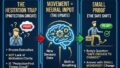
Social Proof and the Herd Mentality Multiplier
Robert Cialdini’s principle of social proof: the tendency to follow the actions of others, especially during uncertainty, transforms Super Bowl advertising into a shared cultural ritual. When 100+ million viewers simultaneously witness the same commercial, the implicit message becomes: “Everyone is seeing this. This must be important.”
The neural mechanism is clear: uncertainty enhances social proof effectiveness. Research demonstrates that similarity, authority, and social validation create powerful nudges toward desired behaviors Hypertxt AI. Super Bowl ads amplify this by featuring celebrities (authority), relatable characters (similarity), and post-game social media discussions (validation).
A 2024 study found that Super Bowl advertising fueled a 16.4% increase in overall product demand among viewers, with brands like Doritos seeing measurable sales lifts P2PI.
Anchoring Effects and Cognitive Priming
Super Bowl commercials often establish anchoring effects: cognitive biases where the first piece of information disproportionately influences subsequent judgments. A luxury car brand showcasing a $150,000 vehicle makes their $75,000 model seem like a “bargain” by comparison.
This exploits what behavioral economists call “arbitrary coherence“: once an anchor is set, subsequent decisions become coherent relative to that anchor, even if the anchor itself was arbitrary. The $7 million cost per 30-second Super Bowl ad? That price tag itself becomes an anchor, signaling to viewers: “This brand invested heavily. This must be a premium product worth considering.”
The Scarcity Principle: Manufacturing Urgency
The scarcity principle -people assign greater value to limited availability- pervades Super Bowl advertising strategy. Whether it’s “Super Bowl exclusive offers,” “tonight only” deals, or product launches timed to the game, advertisers exploit our irrational overvaluation of scarce resources.
A 2023 meta-analysis examining scarcity’s role in marketing found that scarcity tactics significantly impact both marketing strategy and consumer behavior, with supply-based scarcity (limited quantity) proving particularly effective Roux et al., PLOS ONE.
The cognitive mechanism: scarcity triggers loss aversion (“If I don’t act now, I’ll lose this opportunity”), creating urgency that bypasses System 2’s analytical guardrails.
Confirmation Bias and Brand Loyalty Reinforcement
Super Bowl ads don’t just recruit new customers; they reinforce existing beliefs through confirmation bias – the tendency to seek, interpret, and remember information confirming pre-existing views.
For established brands, Super Bowl commercials serve as expensive loyalty signals. Coca-Cola doesn’t need to convince viewers that soda exists; they’re activating nostalgic associations and confirming the viewer’s existing brand preference. This aligns with research showing that brand recognition and emotional connection outweigh informational content in advertising effectiveness Global Survey.
Neuromarketing: Reverse-Engineering the Irrational Mind
The convergence of neuroscience and behavioral economics has birthed neuromarketing – the practice of using EEG, fMRI, eye-tracking, and biometric monitoring to decode subconscious responses. The Temple University study exemplifies this: researchers monitored skin conductance, heart rates, respiration, and brain activation to identify which commercials triggered the strongest neural engagement NMSBA.
Key finding: ads that activated the ventral striatum (reward center) and ventromedial prefrontal cortex (value computation) during emotional peaks showed the highest post-viewing purchase intent. This represents a paradigm shift – advertisers can now optimize for neurological response patterns rather than relying solely on conscious self-reports.
The Nudge Architecture of Super Bowl Commercials
Richard Thaler and Cass Sunstein’s nudge theory: using choice architecture to predictably alter behavior without restricting options, infuses modern Super Bowl advertising. Subtle environmental changes, default options, and strategic framing create nudges that guide decisions without explicit persuasion The Decision Lab.
Examples include:
- Default effects: “Visit our website” assumes action
- Framing effects: “9 out of 10 customers satisfied” vs. “1 out of 10 dissatisfied”
- Salience: Bright colors, loud sounds, unexpected elements that hijack attention
A 2023 study found that nudges help individuals resist immediate rewards while marketing exploits our lack of self-control—Super Bowl ads walk this ethical tightrope Corcos et al., Nature Humanities and Social Sciences Communications.
The Memorability Equation: Emotion × Story × Surprise
Synthesizing the behavioral economics research, the most effective Super Bowl ads optimize three variables:
- Emotional Intensity (Peak-End Rule + System 1 Activation)
- Narrative Structure (Story-based memory encoding)
- Unexpected Elements (Pattern interruption + curiosity gap)
The Temple University fMRI study confirmed that ads with relatable characters in slowly developing stories delivered the highest engagement, precisely because they satisfied these three criteria NMSBA.
The MVPs of Cognitive Exploitation
The behavioral economics hall of fame for Super Bowl advertising includes:
- Budweiser’s Clydesdale puppy ads: Loss aversion (separation) + Peak-End Rule (reunion) + Social proof (shared cultural moment)
- Volkswagen’s “The Force” (2011): Surprise (unexpected power) + Social proof (viral sharing) + Positive Peak-End
- Dove’s Real Beauty campaigns: Confirmation bias (self-acceptance values) + Authority (expert endorsement) + Emotional resonance
Ethical Considerations: When Nudges Become Manipulation
The sophistication of behavioral economics in advertising raises questions: When does influence become manipulation? Research suggests that exploiting cognitive biases can induce unnecessary purchases, contributing to overconsumption and financial strain Learning Loop.
The distinction often lies in alignment: nudges that help consumers achieve their own stated goals are ethical; those that exploit vulnerabilities for pure profit cross into manipulation territory.
The Final Whistle: Rationality’s Defeat
In the grand game of Super Bowl advertising, the evidence is unequivocal: we are not the rational actors classical economics assumed. Our brains rely on heuristics, emotional shortcuts, and cognitive biases that savvy advertisers systematically exploit.
By understanding System 1 thinking, the Peak-End Rule, loss aversion, social proof, anchoring effects, and scarcity principles, advertisers craft commercials that don’t just capture attention—they rewire our preference structures at the neurological level.
So when you watch Super Bowl LX tonight, remember: while the players battle on the field, behavioral economists are scoring touchdowns in your ventral striatum. The true MVPs aren’t the athletes—they’re the cognitive biases that made you remember, feel, and perhaps even buy.
References:
Barton, B., et al. (2022). Scarcity tactics in marketing: A meta-analysis of product scarcity. Journal of the Academy of Marketing Science.
Corcos, A., et al. (2023). How nudges and marketing frame time preference. Nature Humanities and Social Sciences Communications.
Dimoka, A., & Vo, K. (2014). Cutting-edge research combines fMRI, biometric results to reveal key elements in Super Bowl ad success. Temple University Center for Neural Decision Making.
Gong, X., et al. (2025). Framing effects on attention to advertisements: Loss aversion and purchase intention. Cognition and Emotion.
Kahneman, D. (2011). Thinking, Fast and Slow. Farrar, Straus and Giroux.
Roux, C., et al. (2023). On the role of scarcity in marketing. PLOS ONE.
Sattorov, A. (2024). Emotional appeal as a determinant of effectiveness in English advertising texts. International Journal of Industrial Engineering, Technology and Operations Management.
Thanks for reading to the end!
Enjoy Super Bowl 2026 and may your System 2 stand a fighting chance against the ads! 🏈🧠
コメント